

Deposing the Sorcerer’s Apprentice
Upon returning to the presidency, Donald Trump appointed Elon Musk as a temporary employee to head a “Department of Governmental Efficiency” (“DOGE”), using the structure of the United States Digital Service, a previously innocuous the White House entity. Executive Order, Establishing And Implementing The President’s “Department Of Government Efficiency,” §2(a) & (b) (Jan. 20, 2025).[1] Musk claimed, as one of his first acts, to have dismantled the U.S. Agency for International Development (“USAID”), an actual statutorily recognized agency, in little more than a weekend no less.[2] Musk announced in a February 3, 2025 tweet: “We spent the weekend feeding USAID into the wood chipper.”[3] The feat of legerdemain was accomplished in the absence of a Senate-confirmed Administrator of USAID.[4]

Musk was not appointed as an “Officer of the United States” consistent with the Constitution’s Appointment’s Clause . U.S. CONST., art. II, §2, cl. 2.[5] Rather he served as a “functionary” who assisted President Trump in his duties. Buckley v. Valeo, 424 U.S. 1, 126 n. 162 (1976). Though not the sorcerer, he was the sorcerer’s apprentice.[6]
A group of plaintiffs sued Musk and others, alleging that the role Musk, members of his DOGE team operating within USAID, and others played in dismantling USAID exceeded their permissible roles under the Appointments Clause. Does 4, et al. v. Musk, Dkt. No. 250462, 1 (Feb. 4, 2026).[7] To buttress their allegations, plaintiffs sought to depose Musk, and two others: (1) Peter Marocco, an official delegated the duties of a USAID Deputy Administrator, and (2) Jeremy Lewin, the DOGE Team Lead[8] assigned to USAID, and delegated the duties of the USAID Deputy Administrator for Policy and Programming and of the USAID Chief Operating Officer. Id. at 2.
Plaintiffs sought testimony regarding Musk’s role in relation to DOGE and USAID, the timing of his placement in certain roles, and the timing of Marocco, Lewin, and others’ placement in their positions at USAID. Id. at 6. Defendants requested a protective order, citing the “apex doctrine,” which precludes deposition of high-ranking government and corporate officials absent exceptional circumstances. Id. at 2.[9] District Judge Chuang rendered a decision with respect to the conflicting motions on last Wednesday.
After canvassing the meager Fourth Circuit precedent on the subject, In re McCarthy, 636 F. App’x 142, 143 (4th Cir. 2015), and Franklin Savings Assn v. Ryan, 922 F.2d 209, 210 (4th Cir. 1991),[10] Judge Chuang concluded that he could enter a protective order only if (1) the deponents were “high-ranking” government officials, (2) the testimony sought regarded the deponent’s internal mental processes or his “reasons for taking official actions,” and (3) no extraordinary circumstances existed making the requested deposition necessary. Does v. Musk, supra, at 3-4.
The District Judge doubted whether Musk, Marocco, and Lewin qualified as sufficiently “high-ranking” officials. Id. at 5. He noted that when courts have barred depositions of cabinet secretaries, they have permitted depositions of senior Senate-confirmed subcabinet members serving under them. Id. (citing In Re U.S. Department of Education, 24 F.4th 692, 696 , 704-705 (9th Cir. 2022)).
He observed that USAID is not a cabinet-level agency, and that neither Musk, Marocco, nor Lewin had headed it. Indeed, they were “operating in an informal or acting role at the time of the relevant events.” Id. Moreover, Musk’s departure from the federal government, and Morocco and Lewin’s departure from their Deputy Administrator positions, further undermined their reliance upon the “apex doctrine.” None could claim to “hav[e] greater duties and time constraints than other witnesses,” a key justification for the doctrine, id. at 5-6 (referencing In re Office of Utah Attorney General, 56 F.4th 1954, 1259 (10th Cir. 2022)[11]
Regarding the second element, the District Judge concluded that plaintiffs did not seek to probe the mental processes used in, or the reasons for, defendants’ decisions, noting that plaintiffs had explicitly disclaimed any intent to do so. Id. at 4-5. The District Judge implicitly distinguished between the mental processes leading to the relevant decisions and the questions who had made them, and on what authority.
Moving on to the third element, extraordinary circumstances justified the need for the depositions. They were essential to identifying the individuals who made key decisions and the timing of those decisions in relation to certain key events, such as closing USAID Headquarters and the agency’s website. Id. at 6-7. The District Judge noted Musk’s assertion in his own social media statements that he and unnamed associates had dismantling USAID. Id. (“[w]e spent the weekend feeding USAID into the wood chipper” (emphasis added)). Evidence suggested that Marocco, and Lewin had been involved in the critical shutdown activities. Plaintiffs had shown that each of the three possessed “personal, first-hand knowledge of facts relevant and essential to resolution of the case” beyond that already in “the public record.” Id. at 7.
Moreover, plaintiffs lacked any alternative means to secure the information. Id. at 7-8. Defendants suggested that plaintiffs must first seek stipulations, propound additional interrogatories, and seek additional deposition of lower-level employees. The Court explained that it had previously directed defendants to submit documentary evidence of critical actions taken to close USAID, and that such documentary evidence would have identified the date of specific actions and the authorizing official. Id. at 8. Judge Chuang noted that defendants had failed to supply any such documentation. He assumed defendants’ good faith in complying with the Court’s directive, a rather thinly veiled indication of his skepticism on that score.

Judge Chuang thus took defendants’ response to his previous order as an acknowledgement that key orders were “given orally, with no documentary record of the decisions.” That left oral testimony from the officials present when the decisions were made as the only available source of evidence. Judge Chuang noted that defendants had never identified any lower-ranking official present at the making of such decisions. Id.
Observations
One benefit of bureaucracies is that they are, well, bureaucratic. They generally adhere to bureaucratic routines, including rigorous documentation of decisions. And such decisions, particularly major ones, should be transparent. NLRB v. Sears, Roebuck & Co., 421 U.S. 132, 152-53, 155-57 (1975)(reconciling FOIA’s proactive disclosure provisions with FOIA’s exemption 5 privileges). Such transparency should extend to the identity of the key decisionmaker or decisionmakers responsible for those decisions.[12] Decisionmakers should either be elected, i.e., the President of the United States, or appointed in conformity with the Appointments Clause. And they should be accountable to the public, in terms of being subject to public questioning by Congress and the public more generally in other ways, to enable assessment of the President’s job performance.[13]
Government decision-makers should also be accountable by way of judicial review. Though the President possesses the power to supervise and direct agency officials to whom Congress has assigned particular responsibilities, presidential direction does not relieve those officials of their obligation to reach decisions consistent with the constraints imposed by statutes, including the considerations to be assessed in making those decisions. See, State v. Su, 121 F.4th 1, 15-16 (9th Cir. 2024);[14] Doctors for America v. Office of Personnel Management, 793 F.Supp.3d 112, 145 (D.D.C. 2025); see generally, Peter L. Strauss, Overseer, or “The Decider”? The President in Administrative Law, 75 GEO. WASH. L. REV. 696 (2007)(extensively discussing the constraints on officials when ordered by the President to take actions subject to legal constraint).[15]
Permitting temporary employees to make decisions Congress assigned to particular Executive Branch officials undermines Congress’ power to create agencies and “define [their] authorities, responsibilities, leadership structure, and chain of command,” see, Consumer Financial Protection Bureau v. All American Check Cashing, Inc., 952 F.3d 591, 597 (5th Cir. 2020)(Higginbotham, J., concurring).[16] Such power derives from the Constitution’s Necessary and Proper Clause, conferring upon Congress the power to “make all Laws which shall be necessary and proper for carrying into Execution [Congress’ article I, section 8] Powers, and all other Powers vested by this Constitution in the Government of the United States, or in any Department or Officer thereof,” U.S. Const., art. I, §8, cl. 18 (emphasis added). CFPB v. All American Check Cashing, 952 F.3d at 597.
In Citizens to Preserve Overton Park v. Volpe, 401 U.S. 402, 420 (1971), the Supreme Court cautioned lower courts to avoid inquiry into the mental processes of administrative decisionmakers by requiring them to give testimony explaining their action, except in rare circumstances. However, the Court assumed that agency decisions would ordinarily be based upon administrative findings, or the like documented, contemporaneously with the decision. (Note Overton Park‘s caveat that “a strong showing of bad faith or improper behavior” could defeat the presumption. Id. at 420.)
Thus, routine processes for deliberation and documenting decisions are, or certainly should be, a precondition for applying the presumption that courts should not summon decision-makers to testify. Neither the decisions nor the decision-makers’ identity should be shrouded in mystery or hidden by subterfuge. See, Department of Commerce v. New York, 588 U.S. 752, 785 (2019); see generally, Bernard W. Bell, Legislative History Without Legislative Intent: The Public Justification Approach to Statutory Interpretation, 60 OHIO ST. L.J. 1, 20-23 (1999)(discussing the public’s right not to be misled); see generally, Publicity, §1.1, STANFORD ENCYCLOPEDIA OF PHILOSOPHY (Jan. 12, 2005, revised Nov. 8, 2021)(entry prepared by Axel Gosseries and Tom Parr).
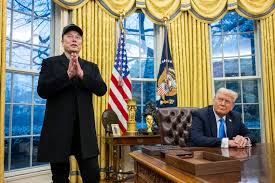
Bureaucratic routines were disregarded in DOGE’s dismantling of USAID. A temporary appointee “heading” an imaginary “Department” appointed in a manner that failed to satisfy the Appointments Clause’s requirements claimed to have dismantled an agency. But when the action became subject to judicial and public scrutiny, that temporary appointee disclaimed responsibility, asserting that others made the “official” decisions, and that he had merely acting at the President’s direction. The basis for the decision was not documented, neither, for that matter, was the evidence of “fraud, waste, and abuse” sufficient to largely shutter the agency.[17] Customary bureaucratic routines of deliberate consideration of a course of action were disregarded.
All this itself constitutes “extraordinary circumstances” justifying at least some means for determining who made decisions and/or took official actions, when, and, frankly, on what basis. Dept of Commerce v. New York, 588 U.S. 752 (2019), upheld the requirement for extra-record discovery in which the Secretary of Commerce sought to publicly give a pretextual reason, relying on a request, purportedly based on the Civil Rights Division independent judgment of its needs, which Secretary Ross surreptitiously pressured the Civil Rights Division to provide. Id. at 781-82. I have previously canvassed many of the pre-Department of Commerce v. New York cases regarding request for high-level officials to testify either in proceedings or at depositions. Bernard W. Bell, Citizenship and the Census: State of New York v. U.S. Department of Commerce (Round One)(Part IV), YALE J. ON REG.: NOTICE & COMMENT (Aug. 22, 2018). The standard for seeking such testimony for purposes of depositions is somewhat lower than that to include such testimony in the judicial record. Id.[18]
District Judge Chuang’s opinion was far narrower than my brief observations suggest appropriate. Understandably, his decision was more cautious, hewing to the elements of the “apex doctrine.” But his analysis goes directly to some of the concerns presented above regarding the absence of written records documenting the decision-making process. Given the circumstances of USAID’s dismantling and the course of the litigation, Judge Chuang was perfectly justified in concluding that no alternatives short of allowing the desired depositions to proceed would prove appropriate. And even so, there is clearly a risk of litigation-focused post hoc rationalizations regarding not only the reasons for the decision, but who had made them.
[1] The official acting head of the U.S. Digital Service was Amy Gleason. Christopher Bing, Avi Asher-Schapiro and Annie Waldman, Who’s Running the DOGE Wrecking Machine: The World’s Richest Man or a Little-Known Bureaucrat?, March 14, 2025, 1:30 p.m. (“[f]ive weeks after its creation and under pressure from a growing cascade of lawsuits, the White House revealed . . . that an obscure bureaucrat named Amy Gleason had been acting as DOGE’s administrator since nearly day one.”). The President expanded the January 20 executive order regarding DOGE by issuing Executive Order 14210, Implementing the President’s “Department of Government Efficiency” Workforce Optimization Initiative, 90 Fed. Reg. 9669 (Feb. 11, 2025).
[2] USAID was initially created by Executive Order 10973, issued by President John F. Kennedy. Congress codified USAID in Section 1413 of the Foreign Affairs Reform and Restructuring Act of 1998, Division G of the Omnibus Consolidated and Emergency Supplemental Appropriations Act of 1999, Pub. L. 105-277. Section 1413 is codified at 22 U.S.C. §6563. Emily M. McCabe, U.S. Agency for International Development: An Overview (Sept. 5, 2025).
[3] Elon Musk, @elonmusk 1:54 AM Feb 3, 2025.
[4] The Administrator of USAID is a Senate-confirmed position. United States Government Policy and Supporting Positions (Government Printing Office July 10, 2025)(Plum Book). Publication of the Plum book is mandated by statute, see 5 U.S.C. §3330f(b).
[5] Indeed, defendants had previously asserted that Musk could not be considered “an Officer of the United States” for two reasons. First, he did not occupy a position “established by law,” with authority vested “pursuant to the laws of the United States.” Second, as a non-career Special Government Employee, he held no “continuing” position. Does 4 et al. v. Musk, 2025 WL 2346258, *19 (D. Md. Aug. 13, 2025) .
[6] The reference is to Justice Antonin Scalia’s witty observation in Alexander v. Sandoval, 532 U.S. 275 (2001), that federal agencies may play “the sorcerer’s apprentice but not the sorcerer himself,” id. at 291, presumably referencing a segment in Walt Disney’s 1940 animated film Fantasia.
[7] Both the District Court’s decision and the amended complaint are available on the Court Listener page for the case. The amended Complaint is item 135; the February 4 opinion is item 200.
[8] The composition of the DOGE teams and the role of the DOGE Team Leads were set forth in paragraph 3(c) of the January 20 order establishing DOGE.
[9] Federal courts of appeals seemingly rarely use the term “apex doctrine.” Serrano v. Cintas Corp., 699 F.3d 884 (6th Cir. 2012), appears to be one of the few explicit references. Federal district judges and magistrates use the term more frequently. I conducted a search in the WESTLAW “All Federal” caselaw database for the term “apex doctrine.” The doctrine is not limited to government officials and covers high-ranking corporate executives as well. Serrano v. Cintas Corp., 699 F.3d at 900-902.
[10] Franklin Savings Assn v. Ryan relied upon United States v. Morgan, 313 U.S. 409 (1941), a case familiar to administrative law scholars, in which plaintiffs had sought to overturn a decision of the Secretary of Agriculture based on the Secretary’s undue reliance upon staff members evaluation of the relevant factual materials.
[11] Musk holds significant leadership roles in several business enterprises, including Tesla, SpaceX, and X (formerly Twitter), which presumably impose particularly demanding “duties and time constraints,” albeit unrelated to his brief sojourn in federal service.
[12] Congress requires agencies to proactively publish their organizational charts, 5 U.S.C. §552(a)(1) (requiring agencies to publish, for the guidance of the public, “descriptions of its central and field organization and . . . the employees . . . from whom, and the methods whereby, the public may obtain information, make submittals or requests, or obtain decisions). Granted the provision seems focused on ensuring that members of the public can identify the appropriate official from whom to request specific agency actions. But such statements of agency action serve broader purposes as well. As ACUS has noted recently, such statements “play a vital role for all stakeholders: they enable policymakers to oversee agency operations, give the public critical insight into how agencies are structured and function, and support both inter-agency coordination and internal administrative efficiency.” Request for Proposals, Administrative Conference of the United States, Statements of Agency Organization 1 (Nov. 17, 2026)(emphasis added), accessible here.
[13] In the separation of powers and federalism contexts, the U.S. Supreme Court has expressed concerns about the dangers of diffusion of responsibility and concomitant diffusion of official accountability. Free Enterprise Fund v. Public Company Accounting Oversight Bd., 561 U.S. 477, 497-98 (2010)(President’s power to remove); New York v. United States, 505 U.S. 144, 168 (1992)(anti-commandeering doctrine protecting state sovereignty). As the Court said in Free Enterprise: “The diffusion of power carries with it a diffusion of accountability.”
While both Free Enterprise and New York v. U.S. focused on electoral accountability, in United States v. Arthrex, Inc., 594 U.S. 1 (2021), the Court applied the Free Enterprise language regarding diffusion of power and concomitant “diffusion of responsibility,” to the Director of the Patent & Trademark Office lack of control over administrative patent judges (“APJs”). Id. at 15. In any event the same concerns regarding diffusion of power and responsibility should presumably apply to the forms of accountability that occur between elections, such as congressional oversight and judicial review.
And it seems obvious that agencies cannot properly function without clear lines of authority between superiors and subordinates.
[14] As the Court there observed: “were agency rules implementing executive orders exempt from APA review” agencies could “implement regulations without the public involvement, transparency, and deliberation required under the APA.”
[15] Prof. Strauss observes: “Perhaps a stronger case for the President as ‘the decider’ in ordinary administration arises in contexts where we do not expect judicial review, a developed record for administrative action, relatively formal administrative process, or FOIA transparency.” Overseer, or “The Decider”?, 75 GEO. WASH. L. REV. at 757.
These issued were discussed extensively in litigation to switch an emergency contraceptive, Plan B, from prescription-only to over-the-counter status. See, Tummino v. Torti, 603 F. Supp. 2d 519 (E.D.N.Y. 2009), Tummino v. Hamburg, 936 F. Supp. 2d 162 (E.D.N.Y. 2009), see generally, Lisa Heizerling, Learning from the FDA’s Plan B Fiasco, REG. BLOG (Dec. 11, 2013).
[16] Accord, Harris v. Bessent, 160 F.4th 1235, 1275 (D.C. Cir. 2025)(Pan, J., dissenting); Caleb Nelson, Special Feature: Must Administrative Officers Serve at the President’s Pleasure?, DEMOCRACY PROJECT (Sept. 25, 2025) (the framers “anticipated that Congress would enact statutes creating offices and other positions within the executive branch, assigning particular duties and authorities to the people who held those positions, and generally determining the structure of the government’s administrative apparatuses”). In CFPB v. All American Check Cashing, Judge Higginbotham notes the basis for this in the First Congress’ expectations and practices. Id. at 597. Jerry L. Mashaw discusses the creation of federal administrative structures in Creating the Administrative Constitution: The Lost One Hundred Years of American Administrative Law (Yale Univ. Press 2021). THE LOST ONE HUNDRED YEARS, at 34-52.
Indeed, to the extent one embraces Justice Clarence Thomas’ view, set forth in Trump v. United States, 603 U.S. 593 (2024), that the Appointments Clause required Congress to establish an “office” by statute, before any appointment of an “Officer of the United States” filling that office can be valid, Id. at 643-48, the above argument is even stronger. No other Justice signed onto Justice Thomas’ separate Trump v. United States concurrence. (Ironically, District Judge Aileen Cannon’s “concurrence” proved decisive in ending the prosecution of former President Trump for allegedly unlawfully retaining classified documents. See, Bernard Bell, Remedying Appointment Clause Violations: Special Counsels (Part I), YALE J. ON REG.: NOTICE & COMMENT (Aug. 19, 2024).)
[17] An alert from USAID’s Inspector General noted that the personnel cuts and limitations on email access effectuated by DOGE had several effects. It made USAID’s existing oversight controls for humanitarian relief “largely nonoperational.” It put “more than $489 million of food assistance at ports, in transit, and in warehouses at risk of spoilage, unanticipated storage needs, and diversion.” Further, DOGE’s actions had “undermined two key oversight mechanisms to ensure accountability over humanitarian assistance funding: partner vetting and third-party monitoring.” Inspector General, U.S. Agency for International Development, Oversight of USAID-Funded Humanitarian Assistance Programming Impacted by Staffing Reductions and Pause on Foreign Assistance 2-4 (Feb. 10, 2025).
[18] The discussion cited Pension Benefit Guar. Corp. v. LTV Steel Corp., 119 F.R.D. 339 (1988) and Public Power Council v. Johnson, 674 F.2d 791, 795 (9th Cir. 1982)(Kennedy, J.)’
